
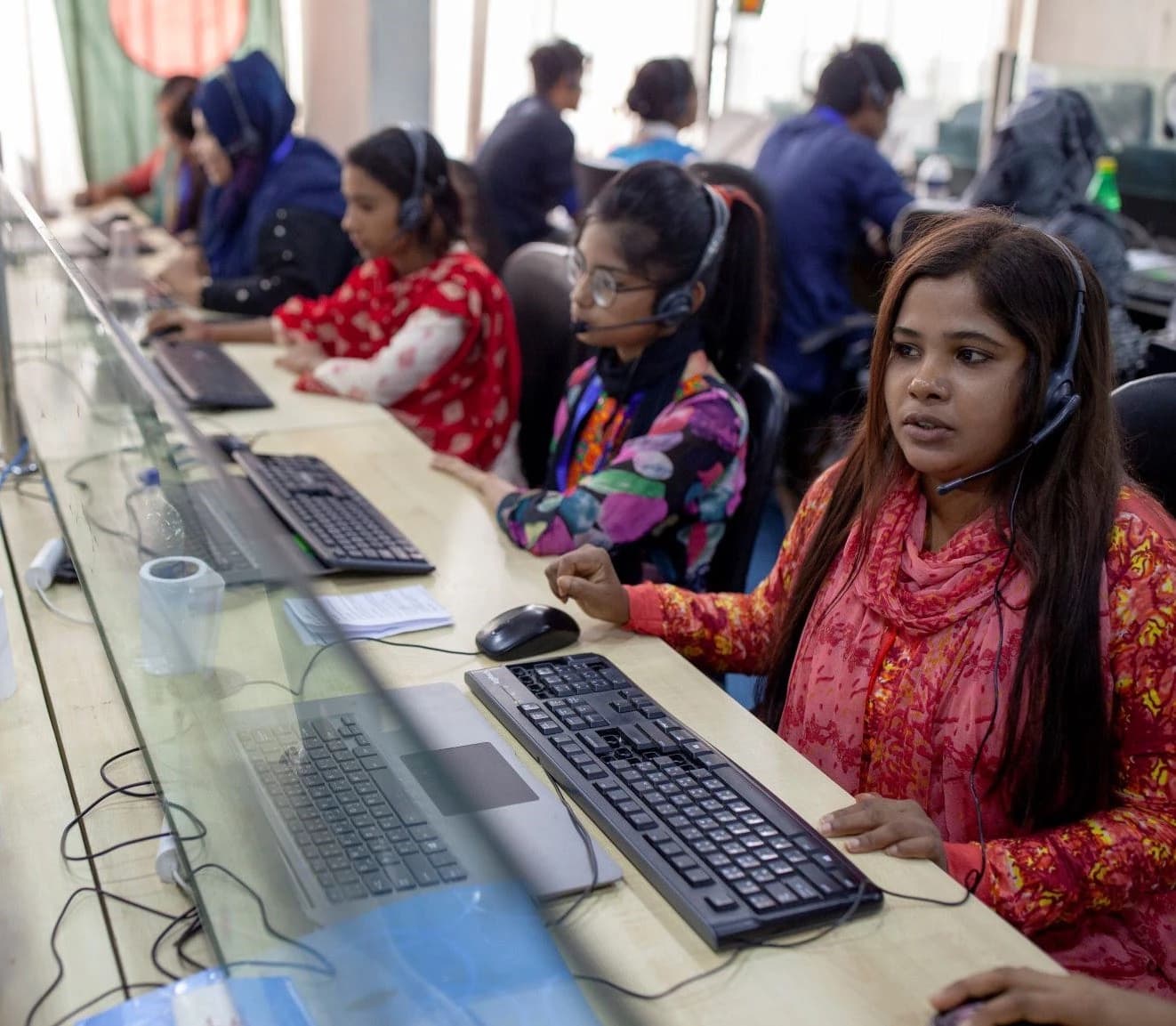
Why Youth Policy Must Move Beyond Speeches
For years, youth policy discussions have sounded ambitious but delivered limited results. The reason is not a lack of intent. It is a lack of execution frameworks.
Youth do not need motivation alone.
They need clear pathways from learning to livelihood.
Borishal, with its growing population of young people, represents both an opportunity and a responsibility. Any serious political vision must answer one fundamental question:
How does a young person move from education to income in today’s economy?
This blog outlines a practical, execution-driven youth framework proposed under the leadership vision of the Bangladesh Nationalist Party (BNP) — focused on skills that convert directly into employability, freelancing capacity, and operational roles.
The Reality Facing Borishal’s Youth
Borishal’s youth face three structural challenges:
- Skills without application
- Training without job linkage
- A gap between national opportunity and local access
While the digital economy is expanding across Bangladesh, participation remains uneven. Many young people are excluded not because they lack intelligence, but because they lack structured execution exposure.
This gap must be addressed with systems, not slogans.
A Shift in Thinking: From Education to Execution
The modern economy values outcomes over credentials.
Global employers, IT service firms, and digital platforms now prioritize:
- Task completion ability
- Process discipline
- Remote collaboration skills
- Reliability and delivery consistency
These are execution skills, not textbook knowledge.
The proposed youth framework for Borishal focuses on exactly this shift — equipping young people with AIOps maturity and micro-tasking capability so they can operate effectively in real digital environments.
The Commitment: Training 10,000 Youth in Execution-Ready Skills
At the core of the proposal is a commitment to train 10,000 youth in:
- AIOps maturity (AI-assisted operations)
- Micro-tasking execution models
- Digital workflow management
- Task-based collaboration and delivery
This is not abstract AI education.
It is job-adjacent, work-oriented training designed to prepare youth for immediate participation in the digital economy.
What Makes This Training Different
Traditional training often measures success by attendance or certificates.
This framework measures success by:
- Tasks completed
- Workflows understood
- Delivery consistency
- Real-world readiness
Participants are trained to:
- Break large objectives into executable steps
- Use digital tools to manage work
- Track progress and outcomes
- Collaborate with teams and clients
This ensures that training translates into capability — not just knowledge.
Why AIOps Maturity Matters for Youth Employment
AIOps maturity does not mean becoming an AI engineer.
It means learning how to:
- Use AI tools to organize work
- Improve efficiency and accuracy
- Reduce errors and delays
- Support decision-making in operations
These skills are relevant across:
- IT support and services
- Freelancing platforms
- Digital operations roles
- SMEs and startups
- Public and private sector projects
This makes the training sector-agnostic and future-resilient.
Micro-Tasking: Lowering the Barrier to Entry
One of the biggest obstacles for youth is the intimidation of large, undefined goals.
Micro-tasking removes that barrier by:
- Breaking work into small, manageable actions
- Allowing youth to build confidence through completion
- Creating a visible record of capability
Instead of waiting for “the perfect job,” youth begin by:
- Completing tasks
- Building experience
- Demonstrating reliability
- Progressively increasing income potential
This is how inclusion becomes practical.
Local Impact, National Relevance
For Borishal, the expected outcomes include:
- Faster youth employability
- Reduced migration pressure
- Growth of local digital service providers
- Stronger participation in the national digital economy
For the country, it creates:
- A broader, more inclusive talent base
- Reduced skills mismatch
- Better alignment between training and labor demand
Borishal becomes a contributor, not a peripheral participant.
Implementation with Accountability
The framework emphasizes:
- Structured training centers
- Hybrid learning models (physical and digital)
- Task-based assessments
- Clear completion milestones
- Transparent progress tracking
This ensures that programs remain measurable, auditable, and outcome-focused.
A New Standard for Youth Policy
This approach represents a shift in youth policy thinking:
- From promises to programs
- From certificates to capability
- From aspiration to execution
It recognizes that dignity comes from productivity, and productivity comes from systems that support action.
Closing Reflection
Borishal’s youth do not lack potential.
They lack structured access to opportunity.
A youth policy grounded in execution, micro-tasking, and AI-assisted operations offers a realistic path forward — one that respects the intelligence, ambition, and resilience of young people.
The future of Borishal will be shaped not by speeches, but by what its youth are enabled to do every day.
That is the standard this vision seeks to set.